
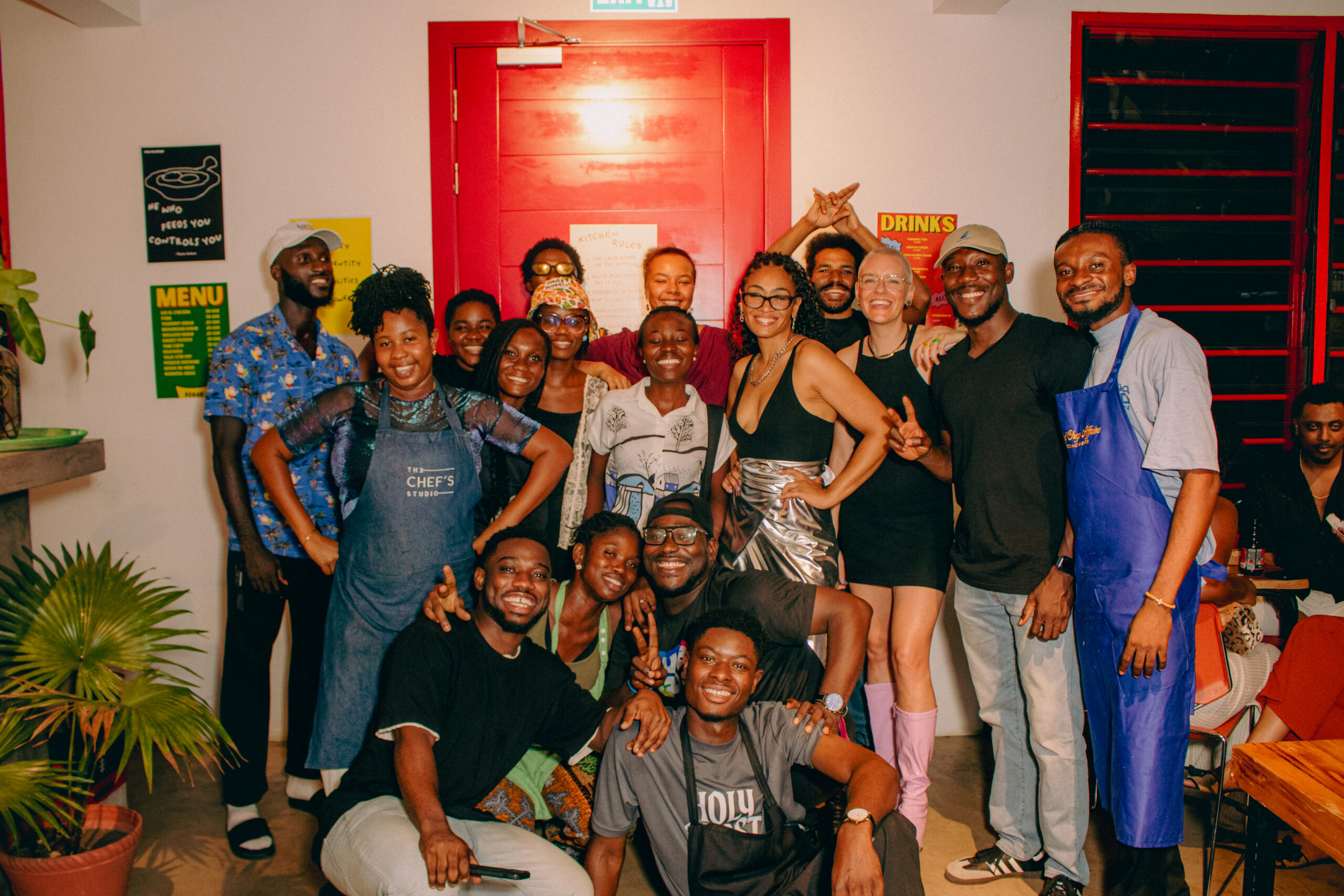
Ghana Food Movement has won the 2026 Champions of Change Award for its work across food, farming and culture. Behind the recognition is a young generation confronting an older problem: how does a country feed itself on its own terms?
Aimée Wallin, the Malian-Swedish co-managing director of Ghana Food Movement (GFM), is part of a generation that has inherited some formidable questions.
Climate change is reshaping what and where people can grow. War thousands of kilometres away can send the price of staples soaring. Ghana exports agricultural commodities while remaining heavily dependent on imported food. And valuable knowledge about Indigenous crops, farming and cooking is disappearing as younger generations move further from it.
These problems eventually arrive at the same place – the plate.
Wallin came to Ghana through her studies. Trained in political science and environmental studies, she had long been interested in politics, sustainability and the environment. Meeting the fledgling Ghana Food Movement in 2021 offered a way to bring those interests together.
“I realised that a lot of my interests connected to food,” she says, “and that I could actually work with food on those topics.”
GFM, a grassroots collective formed in 2019, has just been named the 2026 recipient of the Champions of Change Award by The 50 Best Restaurants, part of the newly rebranded hospitality platform The 50. Four members of the organisation, including co-managing director Abdallah M. Smith, will travel to Lima for the awards on 4 November.
“Ghana Food Movement stood out for its ability to turn ambitious ideas into tangible, community-led change,” says Faye Huggett, Director of Community for The 50. “Its work goes beyond championing Ghanaian food culture, creating real opportunities for the next generation while building a more resilient and sustainable food system.”
Ghana Food Movement joins the likes of Congolese chef Dieuveil Malonga of Meza Malonga in Rwanda, a Champion of Change in 2022, and Nora Fitzgerald Belahcen of Marrakech’s Amal Centre, who received the award in 2023.
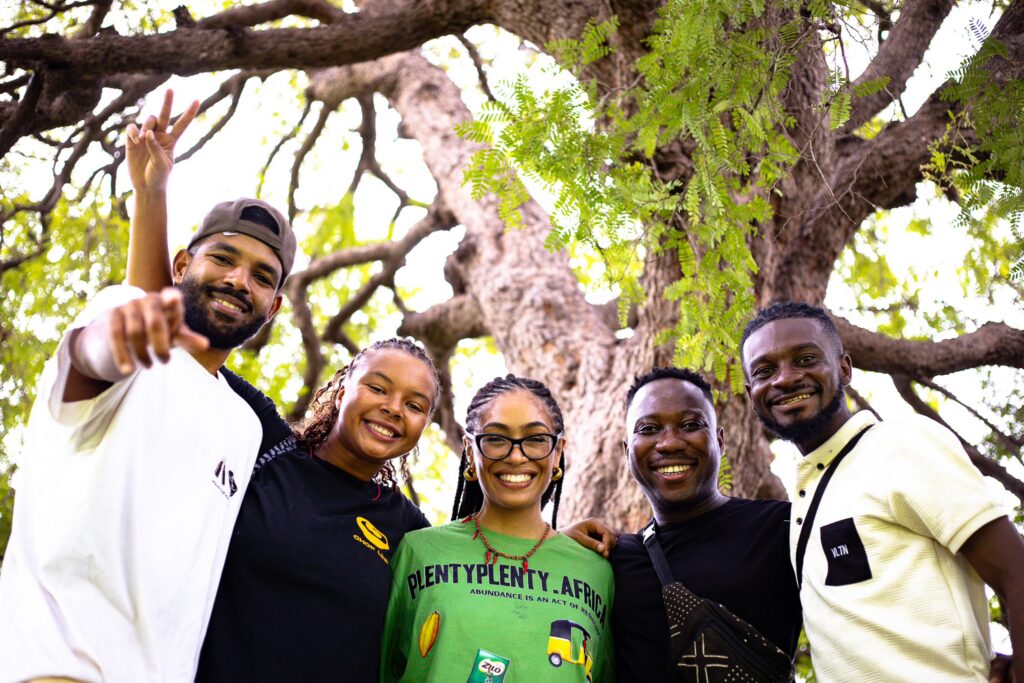
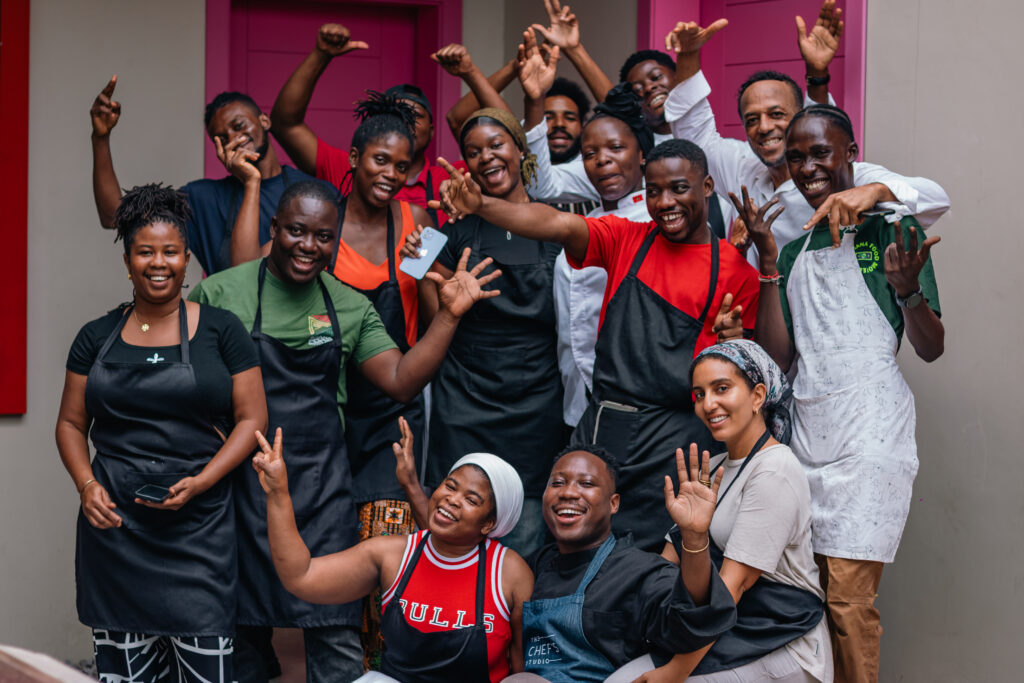
The current and next generation sit at the heart of the story. GFM has 15 young staff and a network of around 250 members, including chefs, farmers, scientists, entrepreneurs, food producers, and others. Wallin puts the median age of the organisation at about 27.
“We are youth,” she says. “We need young people to be excited about working in food, whether it is as farmers or in hospitality or as chefs. We need people that are passionate.”
That passion is being tested against a food system whose vulnerabilities are no abstraction.
Wallin points to two recent shocks: Covid-19 and Russia’s invasion of Ukraine, and the food-price increases that followed. “We saw it when Covid happened. We saw it with the invasion of Ukraine, how certain food prices just completely spiked,” she says.
The numbers give some scale to that vulnerability. A recent World Bank assessment, citing IFAD data, puts the share of Ghana’s domestic demand met by local production at just 51% for cereals, 60% for fish and 50% for meat. According to the Ghana Statistical Service’s 2024 Trade Report, Ghana imported GH₵38.95 billion worth of food products in 2024, up GH₵12.2 billion from the previous year. It brings Wallin back to an idea associated with Burkina Faso’s revolutionary leader Thomas Sankara: those who feed you, can control you.
Credit: Lydia Amenyaglo
“When you rely on a global food system,” she says, “you become so fragile. And when shocks happen anywhere in the global system, your people will actually suffer from that.”
Food sovereignty, then, is also about what happens before food reaches the plate. Wallin traces part of Ghana’s vulnerability to a colonial economic model built around producing cash crops for export, earning foreign currency and then using it to buy food.
“Since colonialism, that agenda was always for us to produce cash crops, export them, get foreign currency, and buy food with that foreign currency to feed our people,” she says.
Ghana has fertile land and farmers, yet staples including rice, poultry and tomato products feature heavily among its imports. Wallin points to jollof, a dish bound tightly to Ghanaian culinary identity.
“Yes, we are really proud about our cuisine, but we need to take it one step further,” she says. “Even when we cook something as traditional as jollof rice, where is the rice coming from, and are we supporting local rice farmers?”
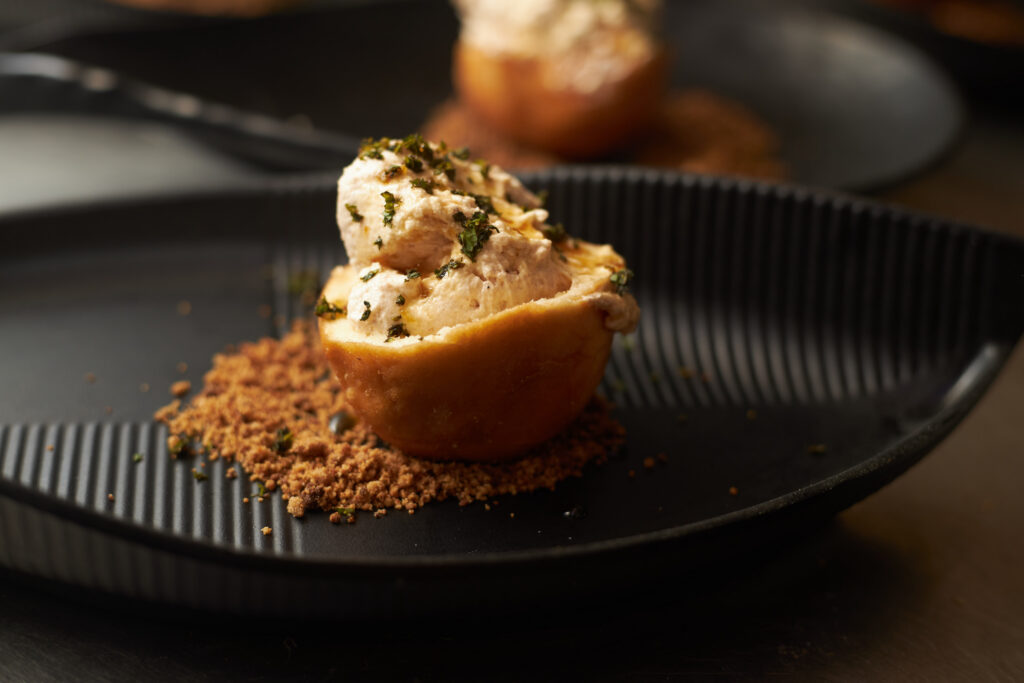
GFM’s response operates across the chain. It trains young people, connects farmers to chefs and consumers, works with schools, promotes local crops and is documenting food knowledge with farming communities. Its school-food pilot is testing how indigenous local crops can be incorporated into meals for children, while its broader work explores crops including fonio, Bambara beans, sorghum, millet, baobab and moringa.
Wallin uses the Akan philosophy of Sankofa to explain the approach. She translates it simply as “go back and get”: looking to the past for knowledge needed to move forward.
Credit:Lydia Amenyaglo
The Smithsonian similarly describes Sankofa as “go back and fetch it”, and as the wisdom of learning from the past in order to move into the future.
“We need to first look at our traditional knowledge,” Wallin says. “Then we can connect that to tech or whatever innovations are going on in the world. But it needs to be based on our knowledge.”
That retrieval is already happening. Young GFM chefs are returning to their home regions and families to document ingredients, recipes and techniques, then bringing that knowledge back to Accra to share with other chefs and work into menus and products.
At The Kitchen, GFM’s food education hub in Osu, Accra, the connection becomes tangible. A recent test café worked with two young Fulani chefs and a herding community near Accra, building a menu around their milk, yoghurt, cheese and ghee. The producers could tell the story of their food, sell what they made and show urban diners the labour and knowledge behind the ingredients.
The problem Wallin hears repeatedly is remarkably simple. Consumers say they cannot find these foods. Farmers say they can grow them but cannot find markets.
“We have the produce. We don’t have markets,” she recounts of the farmers’ dilemma. Without buyers, she says, farmers turn to maize or soybeans instead of Indigenous crops such as Bambara beans, sorghum and millets that can require fewer inputs and be better suited to local soils.
GFM
GFM is trying to close that distance, while acknowledging a tougher question: if Indigenous African ingredients become more desirable, who captures their value?“How are we going to make sure that farming communities really take their fair share of the resources that they contribute to that work?” Wallin asks. “That is something that we really need to figure out.”
There is urgency in that unfinished work. Ghana’s food system is also confronting climate pressure, biodiversity loss and galamsey, illegal small-scale gold mining that has contaminated farmland and waterways in agricultural areas. GFM’s young members have inherited problems they did not create, while living through global crises that demonstrate how quickly food systems can fracture.
Their response is intensely practical: learn from elders and farmers while that knowledge remains available; create markets for what Ghana can grow; equip young people to build livelihoods from food; and make local production economically viable.
For Wallin, the award belongs to that collective.
“It’s not about any single person,” she says. “It’s always about the community that we are as Ghana Food Movement.”
In November, four members of that community will carry the story to Lima. The larger test remains at home: whether a young generation can help build a food system capable of feeding Ghana with greater independence, dignity and resilience.
Sources and links
• The 50: Ghana Food Movement, Champions of Change Award and Lima context
• World Bank: Ghana Country Economic Memorandum (domestic production share of demand)
• Ghana Statistical Service: 2024 Trade Report
• Smithsonian National Museum of African Art: Sankofa